
Small repairs
Drywall repair in Rochester, NY: when does a wall need a real patch?
A useful guide to deciding when a small mark may only need filler and when damaged drywall needs a more complete repair.
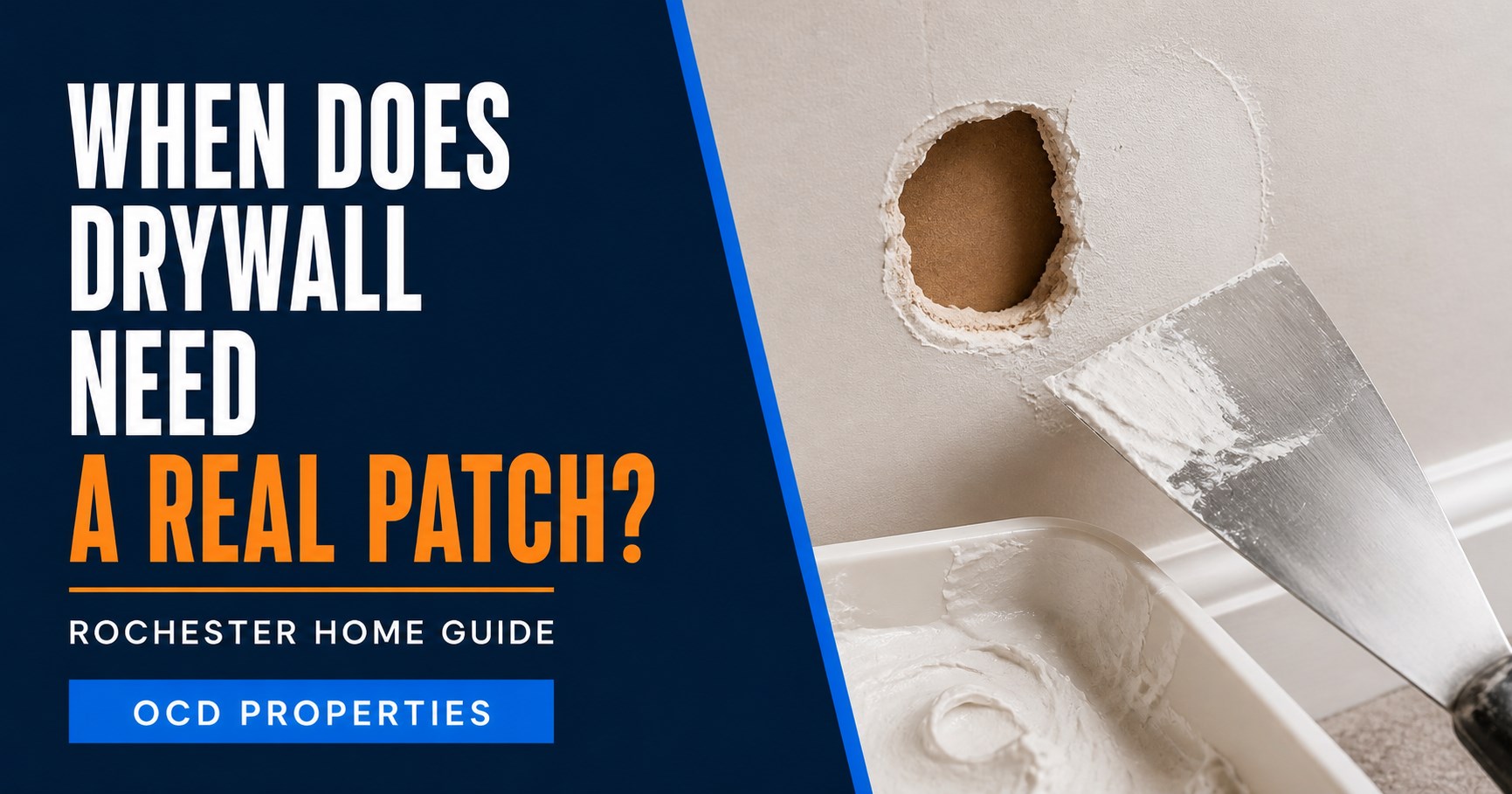
The short answer
Tiny surface damage may need filler, but an open or weakened area needs more
A clean nail hole or shallow dent may be suitable for a small fill. A larger opening, broken drywall core, torn paper, damaged corner, soft area, or repeated crack usually needs a closer look.
Water staining is different. The source of moisture should be identified and corrected before the wall is patched and painted.
- Small nail holes may only need filler and light sanding.
- Anchor holes can be larger than they first appear after the hardware is removed.
- A door handle impact may break the drywall beneath an intact looking surface.
- Torn paper needs proper preparation or it may show through the finish.
- Soft, swollen, stained, or damp drywall should not be covered before the cause is addressed.
Match the repair to the damage
A drywall repair in Rochester, NY can look simple in a straight on photo. A side angle and a size reference can reveal much more.
| Damage | What it may need | What to check first |
|---|---|---|
| Tiny nail or pin hole | Small fill and sanding | Confirm the surface around it is firm. |
| Screw or anchor hole | Filler or a small patch, depending on size | Remove loose paper and check how wide the opening becomes. |
| Shallow dent | Surface repair | Look across the wall with light from the side. |
| Door handle impact | Patch if the drywall core is broken | Press gently around the area and look for cracking. |
| Torn face paper | Sealing and a proper finish process | Do not spread wet compound directly over loose paper. |
| Open hole | Backing or a fitted patch | Check for wires, pipes, and hidden damage before cutting. |
| Water stain or soft wall | Source correction before cosmetic repair | Determine whether the area is dry and why it became wet. |
| Crack that keeps returning | More than a simple fill may be needed | Look for movement, a weak joint, or another underlying cause. |
The exact method depends on wall condition, hole size, texture, access, and the finish expected.
Why a quick fill can still show after painting
A repair may feel smooth to the hand and remain visible once paint dries. Several things can cause this:
- The filled area sits slightly higher or lower than the wall.
- Sanding marks extend beyond the repair.
- Torn paper or a rough edge was not prepared correctly.
- The wall has a texture that was not matched.
- New paint reflects light differently than the older surrounding paint.
- The existing wall color has faded or the original paint is unavailable.
- The repair was painted before the material was ready.
Side lighting is unforgiving. Check the wall from the doorway and from the main viewing angle, not only from a few inches away.
What does ready for paint mean?
A ready for paint drywall patch should be dry, stable, sanded to the agreed finish, and free of loose dust. It does not automatically include primer, color matching, wall painting, texture matching, or painting the full room unless those items are in the estimate.
Even a well prepared patch can remain visible if only a small spot is painted on an older wall. The paint sheen, color, age, application method, and room lighting all affect the result.
For a rental turnover or home sale, decide whether the goal is a functional patch, a ready for paint surface, a local touch up, or a full wall finish. Those are different scopes.
When a wall should not be patched yet
Pause before cosmetic repair when:
- The wall is damp, soft, swollen, or actively stained.
- There is a musty odor or visible growth that may need specialist review.
- The same crack has returned several times.
- The damage is close to an outlet, switch, plumbing fixture, or known pipe route.
- A large area moves when lightly pressed.
- The ceiling is sagging or the wall shape has changed.
- The opening reveals damage beyond the drywall.
The repair provider should not hide an active source problem. Photos and notes can help the owner decide which professional needs to go first.
Drywall repair before a rental turnover
Wall damage becomes more noticeable after furniture and pictures are removed. Walk through each room once the property is empty and mark every repair with removable tape or a numbered note.
Group the work by room. Take one wide photo and one close photo for each area. Include a ruler or tape measure beside larger damage.
Common turnover items include:
- Nail and anchor holes.
- Dents from furniture.
- Door handle impacts.
- Damaged corners.
- Openings left after a fixture or shelf was removed.
- Small ceiling damage after the source has been resolved.
- Repairs that need to be finished before painting.
A complete list is easier to estimate than a series of new holes discovered after work begins.
Drywall repair before listing a home
Listing photos can make small wall defects more obvious, especially on plain walls with strong window light. Prioritize damage that appears in the entry, living room, kitchen, primary bedroom, stairway, and the main camera path.
Do not start opening walls or creating a large repair project only to improve a photograph. If the damage suggests moisture, movement, or a deeper condition, discuss it with the appropriate professional and the seller’s real estate agent.
What photos should you send?
Send:
- One wide photo showing the wall and room.
- One close photo of the damage.
- One side angle with light across the surface.
- A ruler or tape measure for scale.
- A note about what caused the damage, if known.
- A note about moisture, softness, movement, or prior repair.
- The finish you expect after the work.
These details help separate a small patch from a larger repair before a visit is scheduled.
Local help
Need a small drywall repair around Rochester?
OCD Properties handles smaller wall holes, dents, and drywall patch items when the surface and job are suitable. Tell us whether you need the repair left ready for paint or want related turnover and cleanup work included. See our drywall patch service and send clear photos for an estimate.